
What Is a Thermal Break in an Aluminium Window?
By Nick Munroe, Director · 23 November 2026
A thermal break is a strip of insulating material, usually a reinforced plastic called polyamide, that joins the inside and outside parts of an aluminium window frame so they never touch. Aluminium carries heat very easily, so a frame made of one solid piece of metal lets warmth from the room run straight through to the cold air outside. The thermal break interrupts that path. The frame is still strong and slim, but the inner face stays much closer to room temperature.
That matters for three reasons. A thermally broken frame loses far less heat, it is much less likely to run with condensation on a cold morning, and it is what allows an aluminium window to meet today's Building Regulations at all. If you are comparing aluminium windows or doors, the thermal break is the first thing to ask about, and the glass is the second.
How does a thermal break actually work?
Picture the frame as two aluminium sections, one facing outdoors and one facing the room, held together by a band of polyamide running the full length of the frame. Heat moves well through metal and poorly through the plastic, so the polyamide acts like a gap in a bridge. Smart Systems, whose windows and doors we fit, describes the polyamide thermal break in its Alitherm Heritage range as creating a barrier between the cold air outside and the warm air inside, which significantly reduces thermal transmittance and improves the overall U value of the window.
The width and design of the break vary from one system to another. Smart describes the break in its Visoglide Plus sliding door as an extended polyamide thermal break, used on every main section of the frame, and that is part of how the door reaches its quoted U value. A wider or more elaborate break generally means a better performing frame, though you will rarely see the break itself once the window is fitted, because it sits inside the profile.
Why do aluminium windows need one when uPVC does not?
Because uPVC is itself a poor conductor of heat, so a uPVC frame does not need a separate barrier. Its hollow chambers do the insulating. Aluminium is the opposite, a metal that conducts heat readily, which is why older aluminium windows made without a break had a reputation for feeling cold to the touch and streaming with water on winter mornings.
Modern aluminium systems are designed around the break from the start. That is what lets them keep the advantages people choose aluminium for, the slim frames, the strength to carry large panes, and powder coated colours, without the old penalty in warmth. There is a fuller comparison of frame materials in what are the most popular window materials.
Do aluminium windows suffer from condensation?
Thermally broken aluminium windows should not suffer from it any more than other modern windows, but it helps to understand where condensation comes from. Government guidance on damp and mould in the home explains that condensation happens when moisture made inside the home cools and settles on the colder parts of the building, and it names window frames as one of them.
An aluminium frame with no thermal break is about as cold as the outside air on its inner face, so it is exactly that kind of surface. A thermally broken frame keeps the inner face warmer, which is why the problem largely goes away. If you still see water on the inside of the glass of new windows, the cause is usually moisture in the room and too little ventilation, not the frame. Why is there condensation on the inside of my windows explains what to do about it, and it is often a matter of using the trickle vents and extractor fans rather than spending money on the windows.
How does a thermal break affect the U value?
The U value measures how much heat passes through a window, and the lower it is the better. For a replacement window in an existing home in England, Approved Document L sets a limit of 1.4 W/m²K or a Window Energy Rating of Band B. That figure covers the whole window, frame and glass together, so a frame that leaks heat would drag the total over the limit however good the glass.
With a good thermal break and the right glass, aluminium windows meet that limit and can go well beyond it. Some published figures from the makers whose systems we fit show the range.
- Smart Alitherm 400 casement windows are quoted at a typical 1.4 W/m²K with a double glazed unit whose centre pane value is 1.0, and at a Window Energy Rating of Band A. The figures are on Smart's Alitherm 400 page.
- Origin OW70 windows are quoted at up to 1.2 W/m²K, with a 65mm sightline.
- Origin OW80 windows are quoted as low as 0.8 W/m²K with Aerogel insulation, with a deeper 91mm sightline. Both are listed on Origin's casement windows page.
Notice that each of these figures depends on the glass as well as the frame. The centre pane value is the glass on its own, and a low E coating on the inner pane is what gets double glazing down to around 1.0. There is more on what the numbers mean in what are U values for windows, and on energy ratings in what's the difference between A, B and C rated windows.
Does the thermal break matter for doors too?
Yes, and arguably more, because doors are larger and often have more frame. The same Approved Document L table sets a limit for a door with more than 60% of its face glazed at 1.4 W/m²K or a Doorset Energy Rating of Band C, and for other doors at 1.4 W/m²K or Band B. Smart quotes its Visoglide Plus sliding door at 1.4 W/m²K with a 1.0 centre pane unit and 1.1 W/m²K with a triple glazed unit, using its upgrade profiles, and lists the system as thermally broken.
A big glazed door is a large area of the outside wall, so it is worth asking for the U value of the exact door you are being quoted for rather than a figure for the range. How wide a sliding door can go and what that does to the glass is covered in how wide can aluminium sliding doors be.
Can a thermally broken window be two colours?
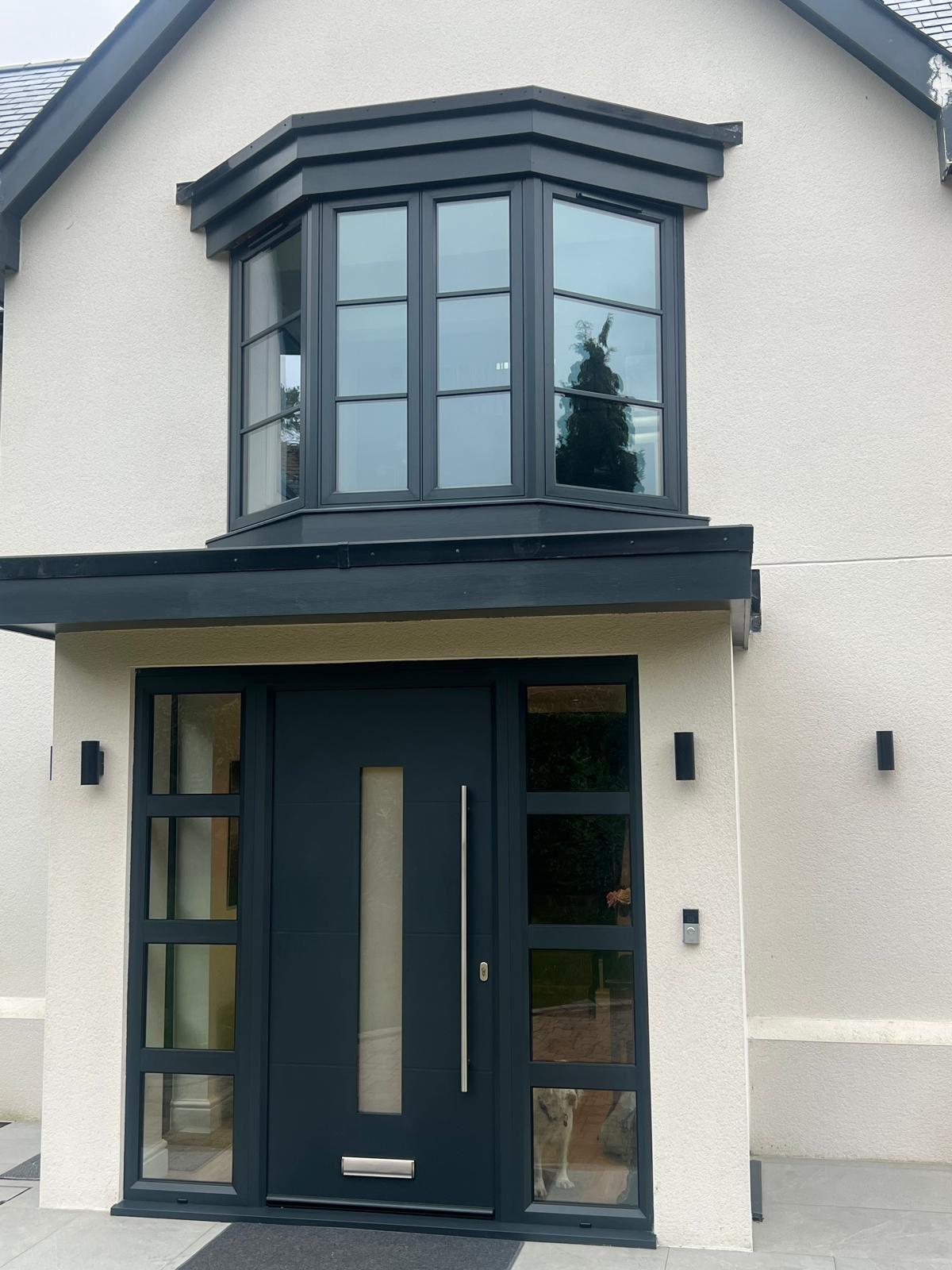
Many can. Because the inside and the outside of the frame are separate aluminium sections, a number of systems are offered in dual colour, one shade outside and another in the room. Smart lists dual colour as an option on both Visoglide Plus and its Alitherm Heritage 60 doors. That could mean anthracite grey outside to suit the house and white inside to keep the room light. Many of the aluminium jobs on our product pages are anthracite grey outside, including the Origin OW80 bay window in the photo above.
What should you ask before you buy aluminium windows?
A few questions sort out a well specified aluminium window from a poor one.
- Is the system thermally broken? Any aluminium window for a home should be. If a quote does not say, ask.
- What is the U value or energy rating of the window as quoted? Ask for the figure for your size and glass, not the best figure in the brochure.
- What glass is in it? Double glazing with a low E coating and a warm edge spacer is the usual standard.
- Is it tested to PAS 24? That is the UK security standard for windows and doors, explained in what is PAS 24.
- Who signs it off? A FENSA registered installer certifies that the window meets the regulations and notifies it to your council for you.
You can see the aluminium windows we fit, including Origin OW70 and OW80 and Smart Alitherm systems, on our aluminium windows page, and the same systems built into bays on our bay windows page.
So, what is a thermal break in an aluminium window?
It is the insulating strip, usually polyamide, that separates the inner and outer aluminium so heat cannot run straight through the frame. It is what keeps a modern aluminium window warm on the inside, stops it streaming with condensation, and lets it meet the 1.4 W/m²K limit for a replacement window, with the glass doing the rest of the work.
Skyway Windows supplies and fits thermally broken aluminium windows and doors from Smart and Origin across Epsom, Esher, Cobham, Weybridge and the rest of Surrey, and you can see more of our work on our windows and doors across Surrey page. If you would like the figures for your own windows, Nick can go through the systems and glass with you. To arrange that, contact us.
Ready to start your project?
Get a free, no-obligation quote from a FENSA-registered installer with over 30 years of experience across Surrey.