
So, What is Low-E glass and why does it matter?
When choosing new windows or doors, many homeowners hear the term Low-E glass but are not always sure what it means or why it is important. It is now widely used in modern glazing and plays a key role in improving comfort, energy efficiency, and overall performance in homes.
Understanding how it works helps homeowners make better decisions when replacing windows or upgrading glazing. We explain what Low-E glass is, how it works, why it matters, and where it makes the biggest difference in everyday living.
What Low-E Glass Is
Low-E stands for low emissivity. It is coated with a very thin, transparent layer of metal or metallic oxide. This coating is applied to the surface of the glass and is designed to reflect heat rather than allow it to pass through.
The coating is so thin that it cannot be seen with the naked eye, and it does not affect the clarity of the glass. From inside the home, it looks just like standard glass but performs very differently.
How It Works
Low-E glass works by controlling heat transfer through the window. Heat naturally moves from warmer areas to cooler ones. In a home, this means heat escapes during winter and enters during summer.
The Low-E coating reflects heat back towards its source. In colder months, it reflects internal heat back into the room, helping the home stay warmer. In warmer months, it reduces the amount of heat from outside that enters the home.3
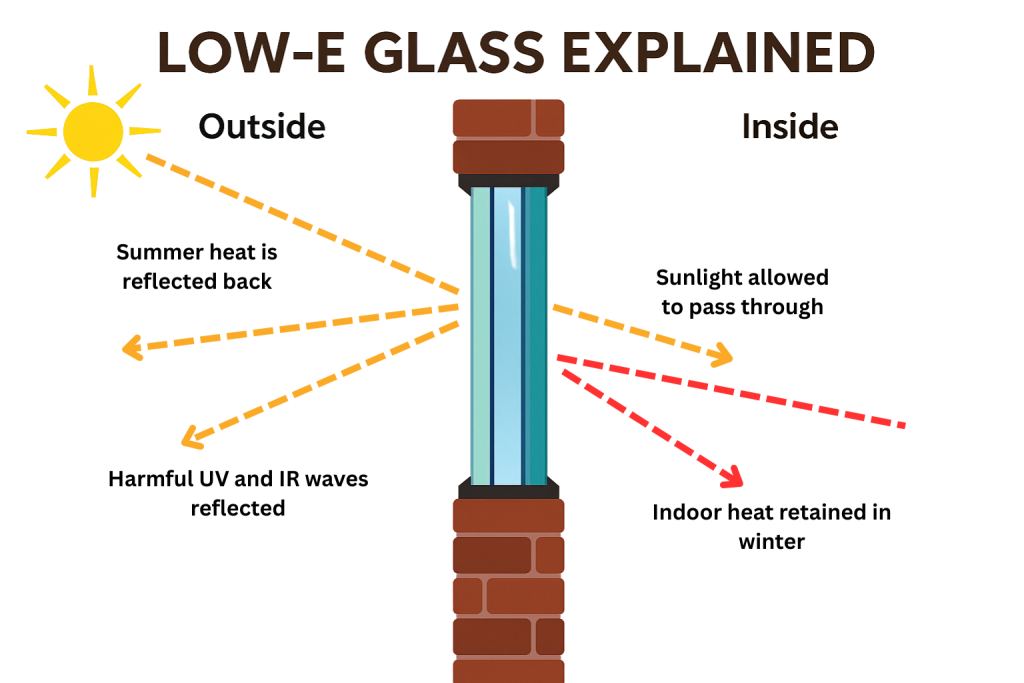
This process helps regulate indoor temperatures and reduces reliance on heating and cooling systems.
Why It Matters in UK Homes
Low-E glass is particularly useful in the UK climate, where homes experience cold winters and mild to warm summers. Traditional single glazing allows heat to escape easily, which can make rooms feel cold and increase heating costs.
Modern double glazing fitted with it significantly reduces heat loss. This helps maintain a more stable indoor temperature throughout the year and improves comfort in all seasons.
Energy Efficiency Benefits
One of the main reasons Low-E glass matters is its impact on energy efficiency.
By reflecting heat back into the home, it reduces the amount of energy needed to maintain comfortable temperatures. This can lead to lower heating bills and reduced energy consumption over time.
Homes fitted with it often feel warmer in winter and cooler in summer, which improves day to day comfort without relying heavily on heating or ventilation.
Reduced Condensation
Low-E glass also helps reduce condensation. Because the inner pane of glass stays warmer, moisture in the air is less likely to settle on the glass surface.
Reduced condensation helps protect window frames, surrounding walls, and internal finishes. It also contributes to a healthier indoor environment by lowering the risk of damp and mould.
Improved Comfort Throughout the Home
Low-E glass improves comfort by reducing cold spots near windows. In older homes with standard glazing, rooms often feel colder near the windows even when the heating is on.
With it, the inner surface of the window stays warmer, which helps maintain a more consistent temperature across the room. This makes living spaces feel more comfortable, especially during colder months.
Low-E Glass and Noise Reduction
While it is primarily designed for thermal performance, it is commonly used as part of double or triple glazing. These sealed units also help reduce outside noise.
Homes located near busy roads or active areas often benefit from the combined insulation and sound reduction provided by modern glazing.
Where Low-E Glass Is Commonly Used
Low-E glass is used in most modern window and door systems. It is commonly fitted in products such as casement windows, which rely on strong seals and efficient glazing to perform well.
Homes that prefer a clean and modern appearance often use it in flush windows, where thermal performance is important alongside design.
Larger openings also benefit from Low-E glass. Systems such as aluminium patio sliding doors and aluminium bifold doors use it to manage heat gain while allowing large amounts of natural light into the home.
Does Low-E Glass Affect Natural Light?
A common concern is whether Low-E glass reduces natural light. In practice, the coating is designed to reflect heat rather than light.
Most homeowners do not notice any reduction in daylight levels. Rooms remain bright, and the glass maintains good clarity. This makes Low-E glass suitable for living areas, kitchens, and spaces where natural light is important.
Low-E Glass Compared to Standard Glass
Standard glass allows heat to pass through easily. This means heat escapes during winter and enters during summer, making temperature control more difficult.
Low-E glass improves on this by reflecting heat and limiting unwanted heat transfer. When used in double glazed units, it provides a noticeable improvement in comfort and energy efficiency compared to standard glazing.
Is It Required by Building Regulations?
Building regulations set minimum energy performance standards for replacement windows. Low-E glass is commonly used to help meet these requirements.
Most replacement windows installed today include it as standard. This ensures compliance with regulations and helps homeowners achieve better thermal performance.
Many homeowners check installer compliance using the FENSA installer checker to confirm that replacement windows meet current standards.
Energy performance ratings are explained by the BFRC, which helps homeowners understand how window efficiency is measured. Guidance on building compliance is also available through LABC.
Low-E Glass and Different Frame Materials
Low-E glass works effectively with all modern frame materials.
uPVC frames provide strong insulation and are commonly paired with it for reliable performance. Aluminium frames use thermal breaks to prevent heat transfer and work well with Low-E glazing in modern designs. Timber frames benefit from the improved insulation provided by Low-E glass while maintaining a traditional appearance.
The performance of the window depends on the combination of glass, frame, and installation quality.
Maintenance and Longevity
Low-E glass does not require any special maintenance. The coating is sealed within the glazing unit and protected from damage.
Cleaning the glass as normal is sufficient. With correct installation and normal care, it performs effectively for many years without deterioration.
Is Low-E Glass Worth It?
For most homeowners, it is absolutely worth it. It improves comfort, reduces heat loss, lowers energy use, and helps meet building regulations.
Because it is now standard in most modern glazing, homeowners often benefit from it without needing to request it separately.
Conclusion
Low-E glass plays an important role in modern windows and doors. By reflecting heat and reducing energy loss, it helps homes stay comfortable throughout the year. It also supports lower energy use, reduced condensation, and improved overall performance. Whether installed in windows or large glazed doors, it makes a clear difference in everyday living. If you would like advice on upgrading your glazing or replacing windows, you can contact us here, and our team at Skyway Windows LTD will be happy to help.